Drew Franke · 13 September 2026
Seasonal Shifts in Micro Aquatic Habitats: Tracking Biodiversity in Backyard Water Features
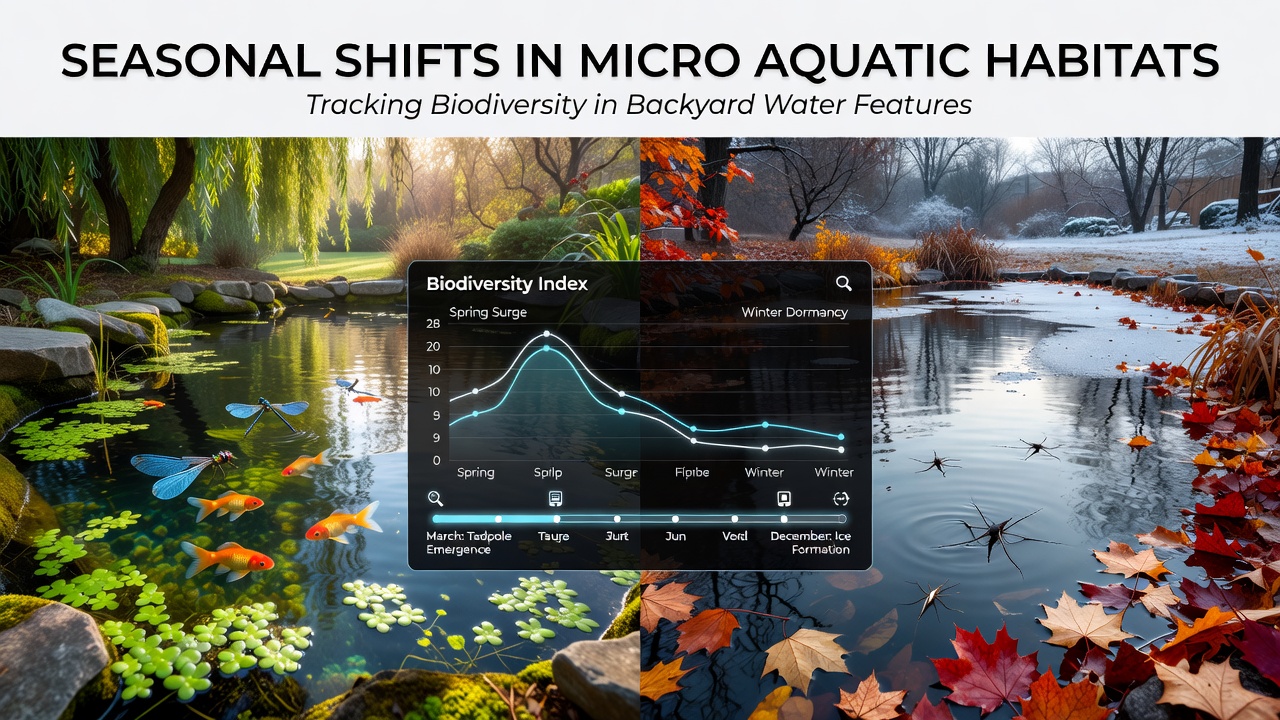
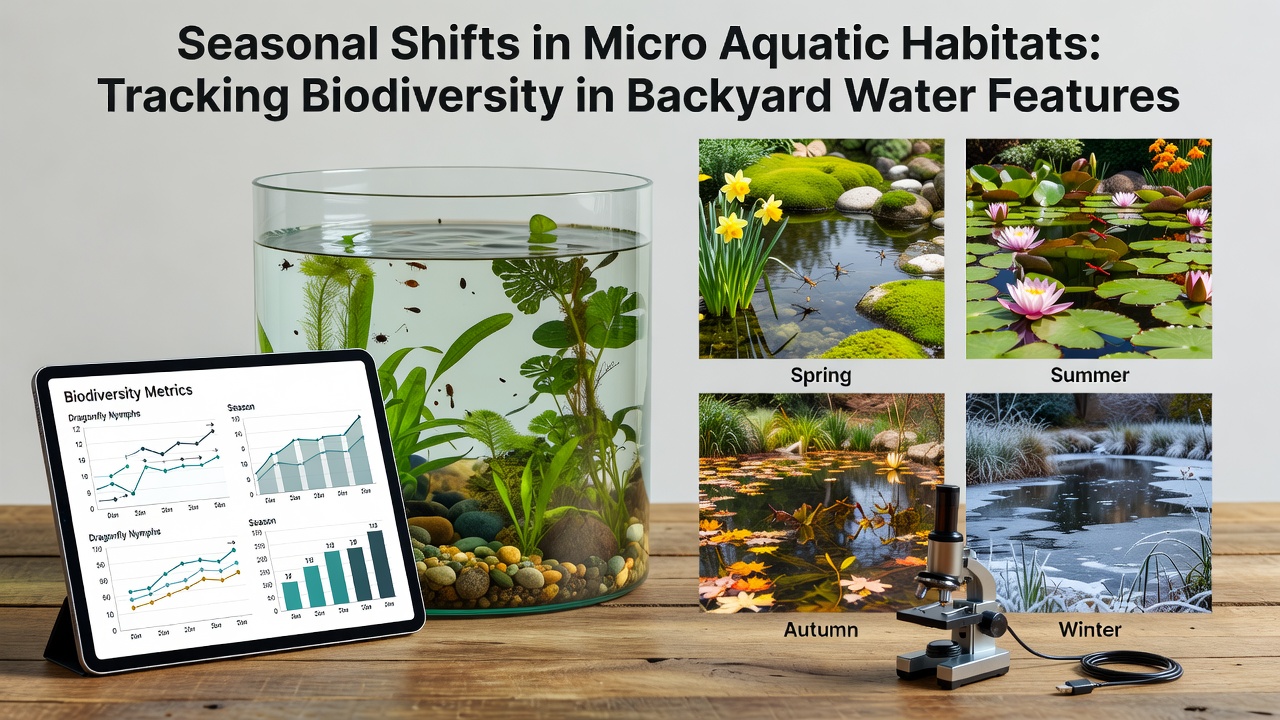
Backyard water features such as ponds, birdbaths, and small fountains create micro aquatic habitats that respond directly to seasonal temperature and light changes, and these shifts influence the presence and abundance of algae, invertebrates, amphibians, and microorganisms throughout the year. Data collected from monitoring programs indicate that spring warming triggers rapid algae proliferation while dormant eggs of aquatic insects hatch in response to increasing photoperiods, which in turn supports emerging populations of dragonfly larvae and mosquito larvae that form the base of localized food webs. Researchers tracking these patterns note that water volume fluctuations from spring rains often dilute nutrient concentrations initially, yet the same precipitation events introduce organic matter that fuels subsequent microbial growth cycles.
Patterns Observed Across Spring and Early Summer
Studies from multiple temperate regions demonstrate that March through May brings measurable increases in species richness as water temperatures climb above 10 degrees Celsius, prompting zooplankton blooms that attract foraging amphibians and birds. In one documented case experts recorded a tripling of macroinvertebrate diversity within four weeks after ice melt, with chironomid midges and water beetles appearing in high densities while submerged plants resumed photosynthesis and oxygen production. These early-season dynamics set the stage for summer conditions where evaporation concentrates nutrients and raises water temperatures, conditions that favor cyanobacterial growth yet also support specialized grazers such as certain snail species that keep algal mats in check.
Summer Dynamics and Peak Activity Periods
By midsummer backyard features frequently experience daily temperature swings of 8 to 12 degrees Celsius that stress oxygen-sensitive taxa while favoring heat-tolerant organisms including certain rotifers and ostracods. Monitoring data reveal that dissolved oxygen levels often drop below 4 milligrams per liter during nighttime hours, prompting behavioral adaptations such as vertical migration among planktonic species and increased surface breathing among tadpoles. Those who maintain consistent measurement protocols report that emergent vegetation reaches maximum biomass in July and August, creating additional structural habitat that shelters juvenile fish and aquatic beetles from predation.
Autumn Transitions and Preparation for Cooler Months
As daylight shortens in September 2026, researchers across North American and European monitoring networks documented accelerated leaf litter input that introduces carbon sources and simultaneously shades water surfaces, lowering temperatures and slowing metabolic rates of many resident species. Observations compiled by the Environmental Protection Agency show that amphibian metamorphosis often completes during this window while many aquatic insects enter diapause as eggs or larvae buried in sediment. Nutrient cycling slows yet remains active, with phosphorus release from decaying plant material supporting limited winter algae growth under thin ice cover in milder climates.
Winter Conditions and Survival Strategies
Winter months bring ice formation that seals off gas exchange and creates hypoxic zones beneath the surface, conditions that select for species capable of anaerobic metabolism or those that overwinter in terrestrial adult stages. Data from long-term Canadian wetland surveys indicate that certain chironomid and oligochaete populations persist at reduced densities while others migrate to deeper refugia or produce antifreeze compounds that prevent cellular damage. Backyard observers using simple temperature loggers and periodic visual surveys have recorded that snow cover insulates small water bodies, maintaining liquid water at the bottom even when air temperatures remain below freezing for extended periods.
Methods for Tracking Biodiversity Changes
Systematic recording of species presence requires consistent sampling intervals and basic equipment such as dip nets, magnifying loupes, and water quality test kits that measure pH, conductivity, and dissolved oxygen. University extension programs recommend photographing specimens for later identification and maintaining digital logs that allow comparison across seasons and years. Citizen science platforms now aggregate these observations, enabling regional analyses that reveal how urban heat islands modify typical seasonal cycles in backyard settings compared with rural reference sites.
Indicators of Habitat Health Across Seasons
Presence of sensitive indicator taxa such as certain caddisfly larvae or mayfly nymphs signals adequate oxygen and low pollutant loads, whereas dominance by tolerant species like bloodworms points to organic enrichment or low oxygen stress. Research coordinated through the Australian Department of Climate Change, Energy, the Environment and Water highlights that seasonal shifts in species composition provide early warnings of broader environmental pressures including nutrient runoff from surrounding lawns and gardens. Regular documentation of these indicators helps property owners understand how maintenance practices such as leaf removal or aeration influence biodiversity trajectories.
Conclusion
Seasonal shifts in micro aquatic habitats reflect complex interactions between temperature, light, nutrient inputs, and organism life cycles that collectively determine biodiversity patterns observable in backyard water features. Long-term tracking efforts demonstrate that consistent monitoring reveals repeatable annual sequences while also detecting deviations linked to climate variability or local management decisions. Continued collection of comparable data across multiple sites supports improved understanding of how these small ecosystems contribute to regional biodiversity and respond to changing environmental conditions.