Drew Franke · 25 October 2026
Microbial Diversity in Residential Pond Filtration Systems: A Closer Look at Unseen Ecosystems
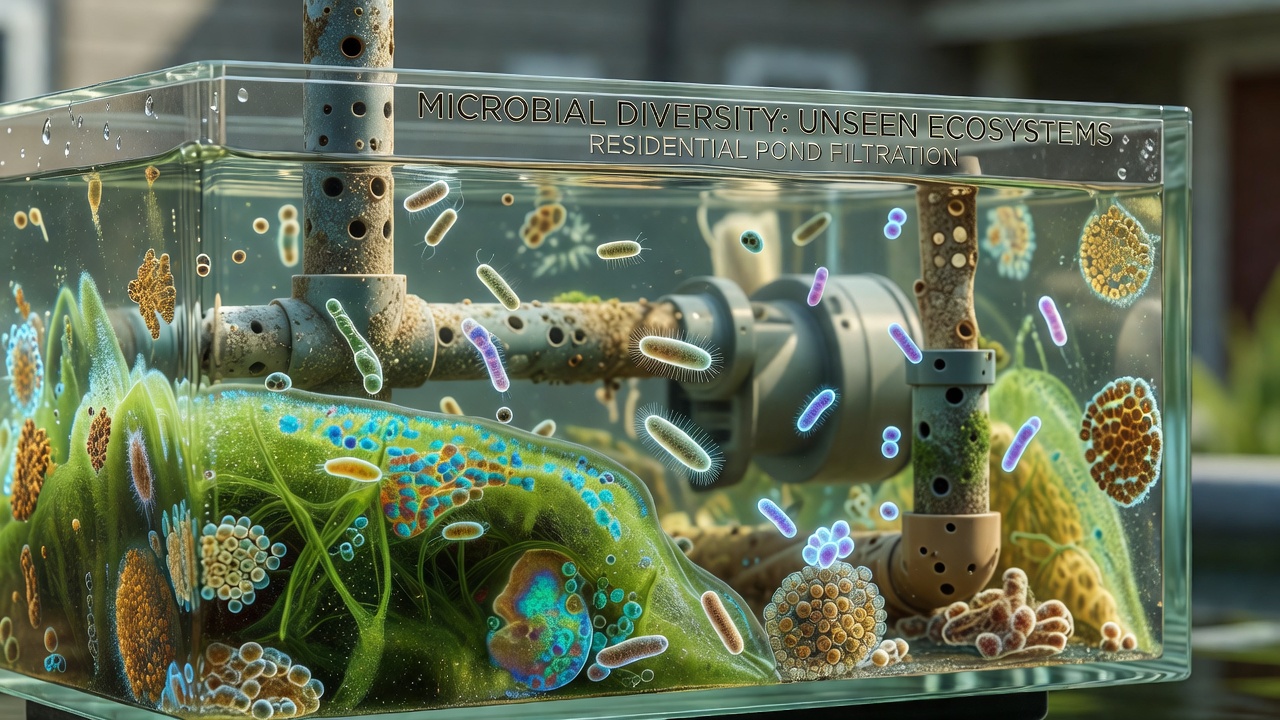
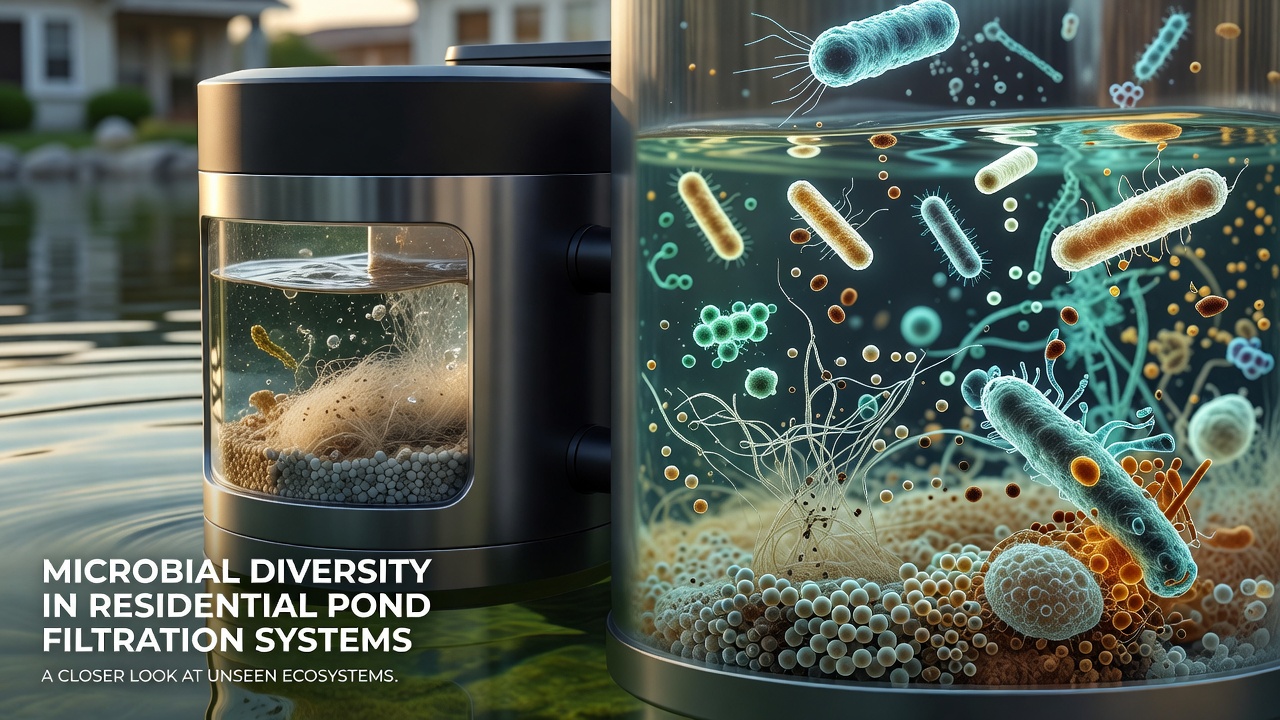
Residential pond filtration systems host complex communities of microorganisms that drive nutrient cycling and maintain water clarity through continuous biological activity. These unseen ecosystems form on filter media surfaces where bacteria, archaea, protozoa, and fungi interact in layered biofilms. Data from long-term monitoring programs show that filter effectiveness depends heavily on the stability and composition of these microbial populations rather than on mechanical components alone.
Researchers have documented that aerobic and anaerobic zones develop within the same filter cartridge or bio-media bed, creating microhabitats that support different metabolic pathways. In systems with consistent water flow, nitrifying bacteria colonize outer layers while denitrifying species occupy inner anaerobic pockets. This spatial separation allows simultaneous ammonia oxidation and nitrate reduction, processes that keep nitrogen levels in balance without external chemical inputs.
Core Microbial Groups and Their Functions
Bacterial genera such as Nitrosomonas and Nitrospira perform the first and second steps of nitrification, converting ammonia into nitrite and then nitrate. Heterotrophic bacteria including Pseudomonas and Bacillus species break down organic detritus that accumulates from fish waste, leaf litter, and uneaten feed. Protozoan grazers like ciliates and flagellates feed on free-floating bacteria, preventing excessive turbidity while recycling nutrients back into the biofilm matrix.
Archaea contribute to ammonia oxidation in colder months when bacterial activity slows, maintaining treatment capacity during temperature drops. Fungal hyphae sometimes appear in older filters, helping decompose complex polymers that bacteria cannot readily access. Studies tracking seasonal changes reveal that community structure shifts with temperature, dissolved oxygen, and organic loading, yet overall function remains stable when diversity stays high.
Biofilm Development and Filter Media Interactions
Biofilms begin forming within days of filter installation as pioneer bacteria attach to plastic or ceramic surfaces through extracellular polymeric substances. Over subsequent weeks the matrix thickens and stratifies, with oxygen gradients creating distinct redox zones. Filter media with high surface area, such as porous ceramic rings or structured plastic blocks, support thicker biofilms and therefore higher microbial biomass per unit volume.
Periodic maintenance that removes accumulated sludge can preserve oxygen penetration and prevent anaerobic pockets from expanding into the entire filter volume. Observers note that gentle rinsing rather than aggressive scrubbing retains established populations while removing excess solids. In October 2026, field data collected across multiple suburban sites indicated that filters cleaned this way recovered ammonia removal rates within 48 hours, whereas heavily disrupted media required up to two weeks for equivalent performance.
Environmental Factors Shaping Diversity
Water temperature directly influences metabolic rates and species composition, with optimal ranges between 15 and 25 degrees Celsius supporting the broadest array of functional groups. pH fluctuations outside 6.5 to 8.5 narrow the range of active microbes and slow nitrification. Ultraviolet sterilizers positioned upstream of biological filters reduce incoming planktonic cells, which can limit recolonization after disturbances.
Nutrient inputs from fish stocking density and feeding schedules alter carbon-to-nitrogen ratios, favoring either autotrophic or heterotrophic dominance. Systems receiving consistent small feedings maintain steadier microbial balance than those experiencing sporadic large loads. Aeration devices increase dissolved oxygen and expand aerobic zones, yet excessive turbulence can shear biofilm layers and export microbial cells into the pond water column.
Monitoring and Management Approaches
Water testing kits that measure ammonia, nitrite, and nitrate provide indirect indicators of microbial activity levels. Sudden spikes often signal disruptions in nitrifying populations caused by medication use, temperature swings, or filter bypasses. DNA-based community profiling, though still primarily used in research settings, has begun appearing in commercial pond service reports to identify shifts before water quality declines become visible.
According to guidance from United States Environmental Protection Agency nutrient management resources, consistent biological filtration reduces the need for chemical interventions in small water bodies. Similar findings appear in reports issued by Australian Government water quality programs, which emphasize the value of preserving established microbial communities during routine upkeep.
Conclusion
Residential pond filtration systems function as engineered microbial habitats whose performance rests on the diversity and activity of unseen organisms. Maintaining conditions that support layered biofilms, balanced redox zones, and resilient species assemblages sustains long-term water quality with minimal external inputs. Continued observation of these communities offers practical insights for homeowners seeking stable, low-maintenance pond environments.